Supply-chain systems built around what is actually moving
Stackera connects RFID reads, inventory changes, warehouse work, shipment conditions, and custody events into one trusted operational record—so teams know what an item is, where it has been, and what needs attention now.
Chain of custody · Quality records · Audit evidence
From periodic counts to a live product history
Supply-chain systems once recorded what the business believed it owned. Today they must prove the identity, location, condition, and custody of every important item as events happen.
2000s
Barcodes digitise the hand-off
ERP, EDI, and barcode workflows replace paper records, but inventory remains a sequence of manual scans and delayed system updates.
2012
RFID makes inventory observable
Item, case, pallet, and asset identities can be captured without line of sight. Read quality and event meaning become the new engineering problem.
2018
Cloud connects the network
IoT gateways, APIs, and shared event models connect facilities and partners, moving visibility beyond the walls of one warehouse.
2021
Resilience demands traceability
Shortages, recalls, and cold-chain disruption expose the cost of incomplete provenance. Chain of custody becomes operational infrastructure.
Now
Physical operations become predictive
AI detects inventory drift, anticipates exceptions, and coordinates routine recovery using live physical events—with people controlling consequential decisions.
AI Transformation · Continuous inventory intelligence
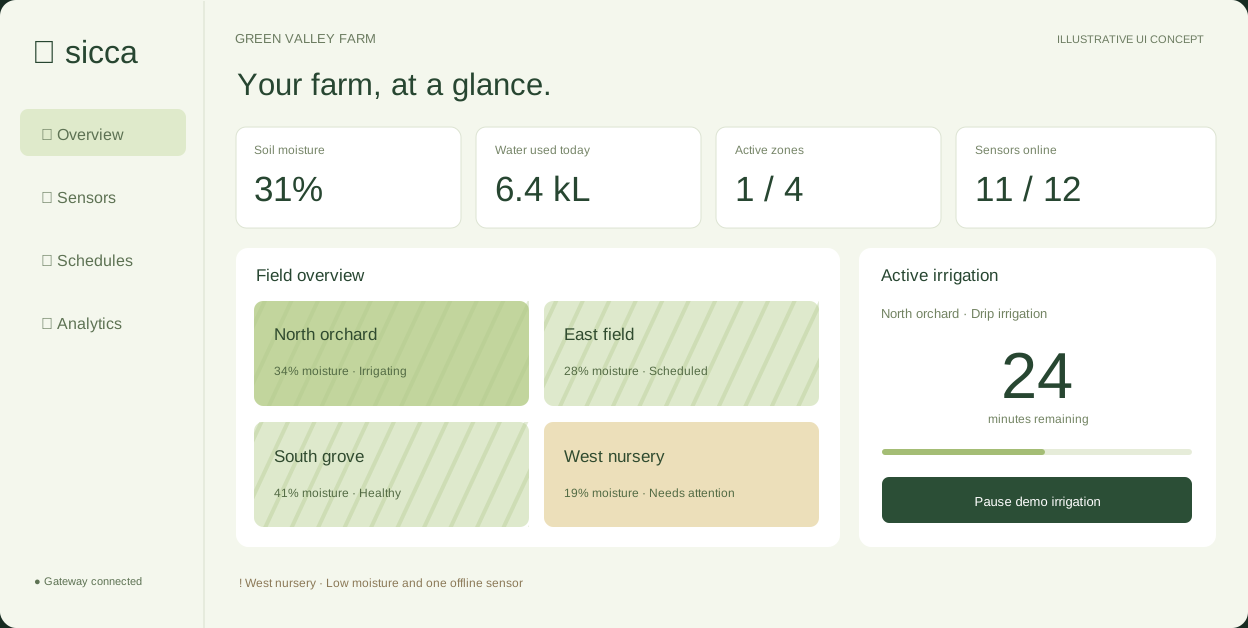
Find inventory drift before the next count
Reconcile RFID reads, movements, and system balances continuously, then focus people on the exceptions that need a physical check.
Why is available stock lower than the warehouse balance?
Four cases were moved to staging but never confirmed at the dock. The last reliable reads place them in lane D-14.
Create a cycle-count task for the floor lead.
✓Read history
✓Location confidence
✓Owner assigned
Physical operations we understand at item level
The right architecture depends on what is being identified, how it moves, and which event must be trusted. We design each platform around those physical realities.
Sector system
RFID, RTLS & Connected Assets
Connected
01RAIN RFID & BLE
02Reader and gateway software
03Read filtering & identity
04Real-time location workflows
Item, pallet, returnable-asset, and equipment tracking built around reliable reads, identity resolution, and location confidence.
✓RAIN RFID & BLE
✓Reader and gateway software
✓Read filtering & identity
Real-time location workflows
A core workflow, designed into the platform from the first release.
04
specialist workstreams
One operating model
Product, data, controls, and operations aligned around the same platform.
RAIN RFID & BLEConnected
Reader and gateway softwareConnected
Read filtering & identityConnected
Connected by design
Identity, events, and evidence move through one dependable system.
Product surface
Built for RFID & Assets
Experience, controls, and data shaped around how this sector operates.
Signs your physical operations have outgrown their first system
The warning is rarely one failed scan. It is the growing gap between what happened on the floor and what the system can prove. If several of these sound familiar, the visibility layer needs attention.
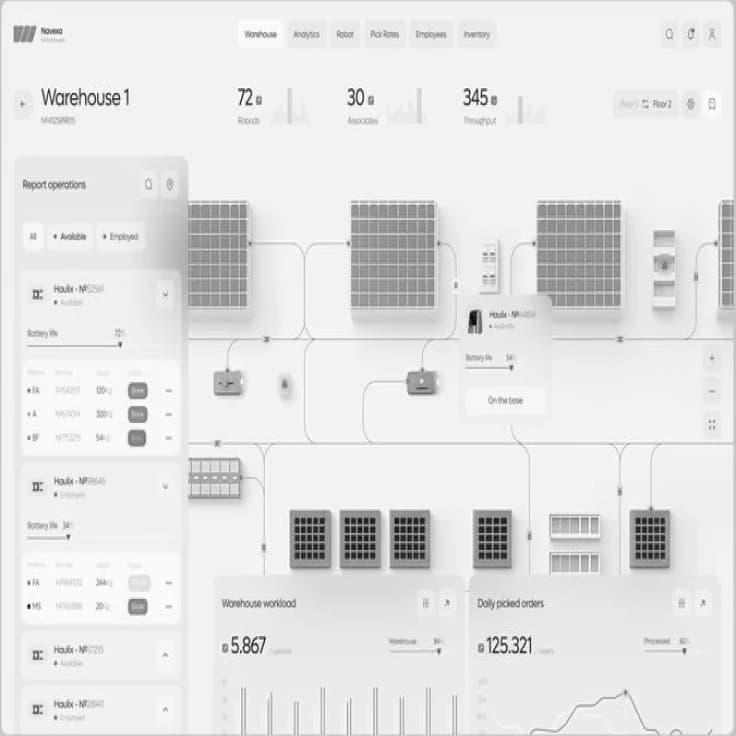
We build item and asset tracking, warehouse and inventory visibility, cold-chain monitoring, product genealogy, recall and traceability, partner event exchange, and operational control-tower platforms. The work can start at the reader and gateway layer or connect equipment and enterprise systems already in place.
Reimagine the World With Your Ideas
Let's turn your institutional vision into a digital reality. Book your strategy session today.

 Pharma products
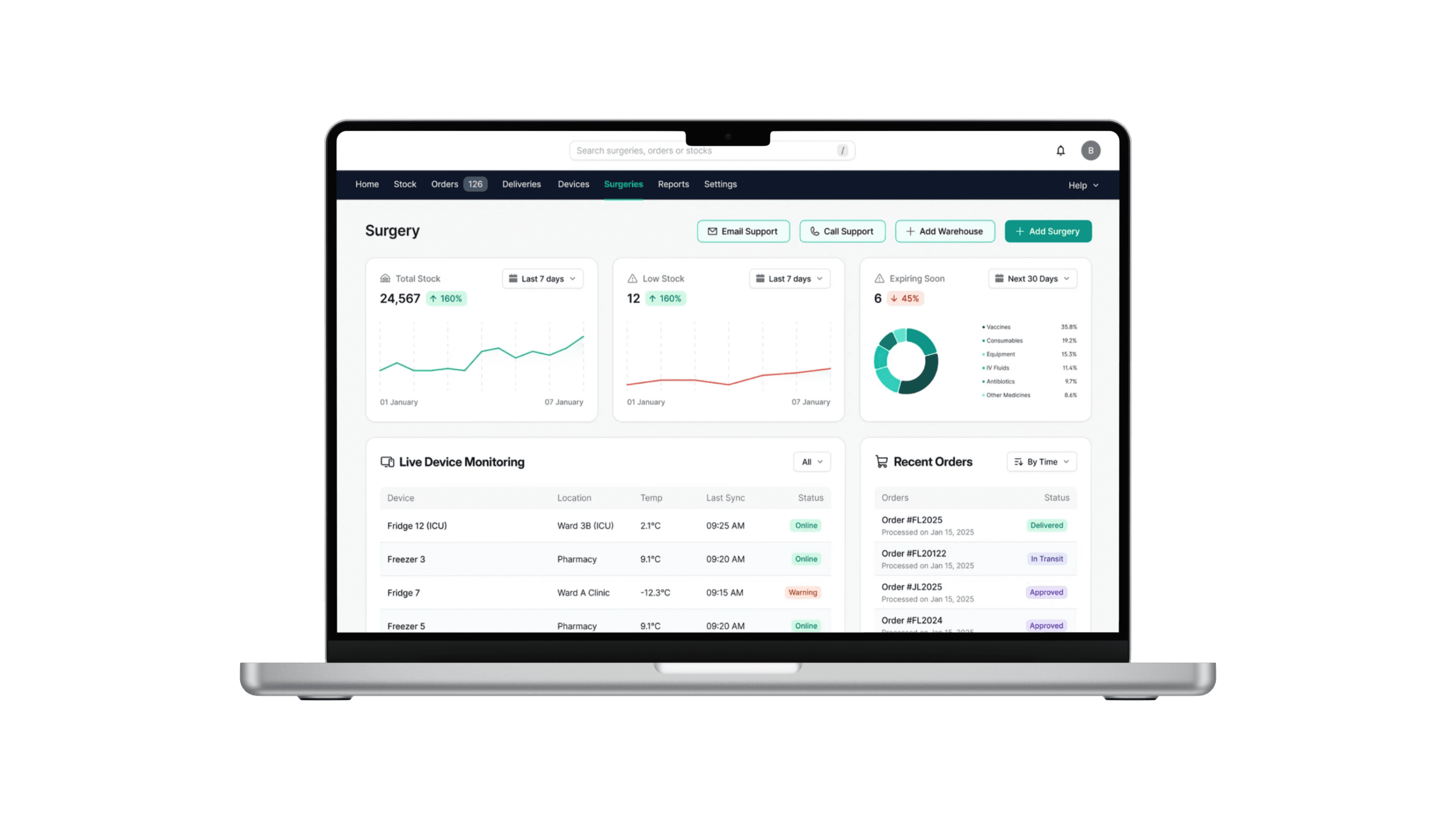
 Total stock
 Expiring soon
 Cold-chain alerts
 Inbound vs outbound
 Stock health
 Warehouse utilization