Item-level tagging is now a mandate
Walmart has extended RFID from apparel to home, electronics, toys, and hardware, with sellable-unit compliance expected in 2026. Suppliers either tag at source or risk rejected shipments.
Stackera builds RAIN RFID and IoT platforms that turn billions of reads into trusted inventory, EPCIS-grade traceability, and exception workflows wired into your ERP and WMS.
RFID stopped being a retail-apparel experiment. Mandates, tag economics, and traceability law now make item-level identity the default—and move the hard problem from reading tags to operating on the data.
Walmart has extended RFID from apparel to home, electronics, toys, and hardware, with sellable-unit compliance expected in 2026. Suppliers either tag at source or risk rejected shipments.
Over 40 billion RAIN RFID chips ship each year and passive inlays cost cents. The cost has moved to reading reliably and turning billions of reads into trusted records.
DSCSA unit-level exchange is being enforced, FSMA 204 follows in 2028, and EU Digital Product Passports start with batteries in 2027. All three lean on GS1 EPCIS 2.0.
Current fixed readers run Linux and host applications, so filtering, deduplication, and direction inference happen at the dock door rather than in a distant cloud.
Vendors are layering agents and anomaly detection over RFID events—predicting shrink, flagging missing reads, and explaining inventory drift in plain language.
Resale, repair, carbon accounting, and returns authentication all depend on a serialized identity that survives from factory to second life.
The gap between tagged products and a dependable operation shows up in accuracy, integration, traceability, and how quickly an exception finds an owner.
Barcode-driven stock records typically run 60–80% accurate, so planners buffer, stores over-order, and online availability lies to customers. Item-level RFID lifts accuracy past 95%—but only when reads, dedup, and zone logic are engineered rather than assumed.
Every engagement follows the same physical-to-digital path. Each stage is owned, measured, and designed so the next one can trust it—which is why the platform still works when a reader misses a tag.
GS1-compliant SGTIN and SSCC encoding at source, with tag-data validation so every identity is unique and resolvable.
Portal, tunnel, shelf, and handheld reads tuned for antenna placement, session settings, dense-reader mode, and stray-read suppression.
LLRP and vendor SDK reads are filtered, deduplicated, and direction-inferred at the edge, with store-and-forward through network outages.
MQTT and stream processing turn raw reads into EPCIS 2.0 object, aggregation, transaction, and sensor events in a governed repository.
Bi-directional integration with SAP, NetSuite, Manhattan, Blue Yonder, and carrier networks—ASN reconciliation, stock updates, and custody.
A digital twin of stock positions, anomaly detection on the event stream, and decision-grade dashboards for operations and audit.
Each platform starts with a physical flow, the identity and events needed to describe it, and the systems that must change when the flow diverges from plan.
Item-level RAIN RFID reads from portals, fixed readers, and handhelds become a live stock position per SKU, location, and zone—no wall-to-wall count required.
Serialized products move through an EPCIS 2.0 event ledger—commission, pack, ship, receive—so recalls, DSCSA exchanges, and Digital Product Passports start from one record.
Returnable containers, tools, pallets, and equipment are located and dwell-timed across sites, with loss and under-utilisation surfaced before they hit the P&L.
Temperature, humidity, and location telemetry is tied to batch, lane, and carrier context, raising excursions early and proving custody for regulated shipments.
Missing reads, mismatched ASNs, late milestones, and shrink patterns are scored, routed to an owner, and resolved in workflows that write back to your ERP and WMS.
From RFID reads and warehouse workflows to shipment visibility and product traceability, we connect devices, business systems, and operational data across your supply chain.
Fixed readers, handheld devices, and edge services that capture item movements across warehouses, facilities, and distribution sites
Receiving, stock counts, put-away, picking, and dispatch workflows connected to live inventory records
Serialized product identities, EPCIS event records, and lot-level histories for tracing goods across supply-chain partners
Sensor integrations, temperature and condition logs, and excursion alerts linked to shipments and storage locations
Shipment milestones, location updates, delivery confirmation, and exception queues for logistics and operations teams
Connections to ERP, WMS, and partner systems that synchronize orders, inventory, and movement events
GS1 Digital Link experiences, product provenance records, and verification workflows connected to serialized item data
Inventory accuracy, dwell time, read coverage, and device-health dashboards with alerts for operational exceptions
Start with a site pilot, build your platform, or expand an existing deployment. We agree the scope, hardware dependencies, and ownership before delivery begins.
Validate tag placement, read coverage, and exception handling in a focused operational area before a wider rollout.
Best for: Teams testing RFID or IoT in a real facility.
Scoped
Build the event pipeline, inventory views, and ERP or WMS integrations around agreed workflows.
Best for: Operators who need one trusted view of items and assets.
4–8 weeks
Repeat proven configurations across locations with site acceptance checks, training, and a staged cutover plan.
Best for: Organizations expanding beyond a successful pilot.
Scoped
Review an existing deployment, trace missed or duplicate events, and prioritize reliability and integration improvements.
Best for: Teams inheriting a tracking platform or mixed reader estate.
Platform takeover in 3 days
How Delivery Runs
Map the physical workflow, hardware dependencies, and integration needs, then agree the pilot scope and acceptance measures.
Validate reads on site, connect event pipelines, and test exception handling with operators before the scoped rollout.
Monitor device health, event quality, and site feedback. Maintain integrations and improve the platform as operations expand.
Start with a discovery sprint to assess your site workflow, hardware dependencies, and integration needs before planning a focused pilot.

+10 Years Of Experience
We design read zones, tag placement, and edge filtering with your operations team before writing the first screen, because no dashboard survives a 70% read rate.
Two production stories showing how physical events become dependable records across pharma cold chain and multi-site logistics operations.

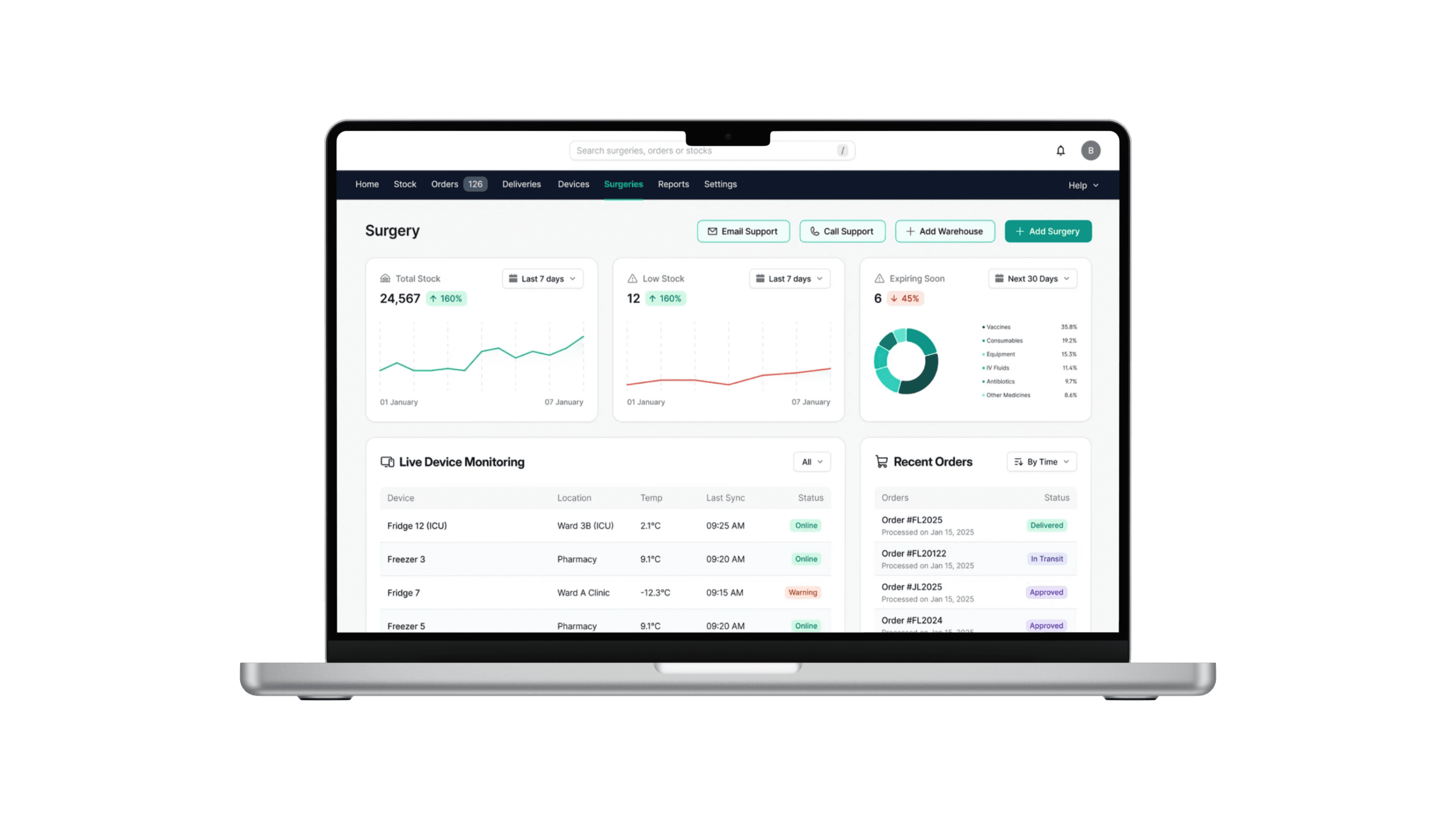
An RFID-enabled healthcare logistics platform for vaccines, medical assets, stock, temperature, and delivery tracking.
View Case Study ↗Pharma warehouse management with RFID tracking, stock movements, deliveries, expiry alerts, and cold-storage visibility.
View Case Study ↗
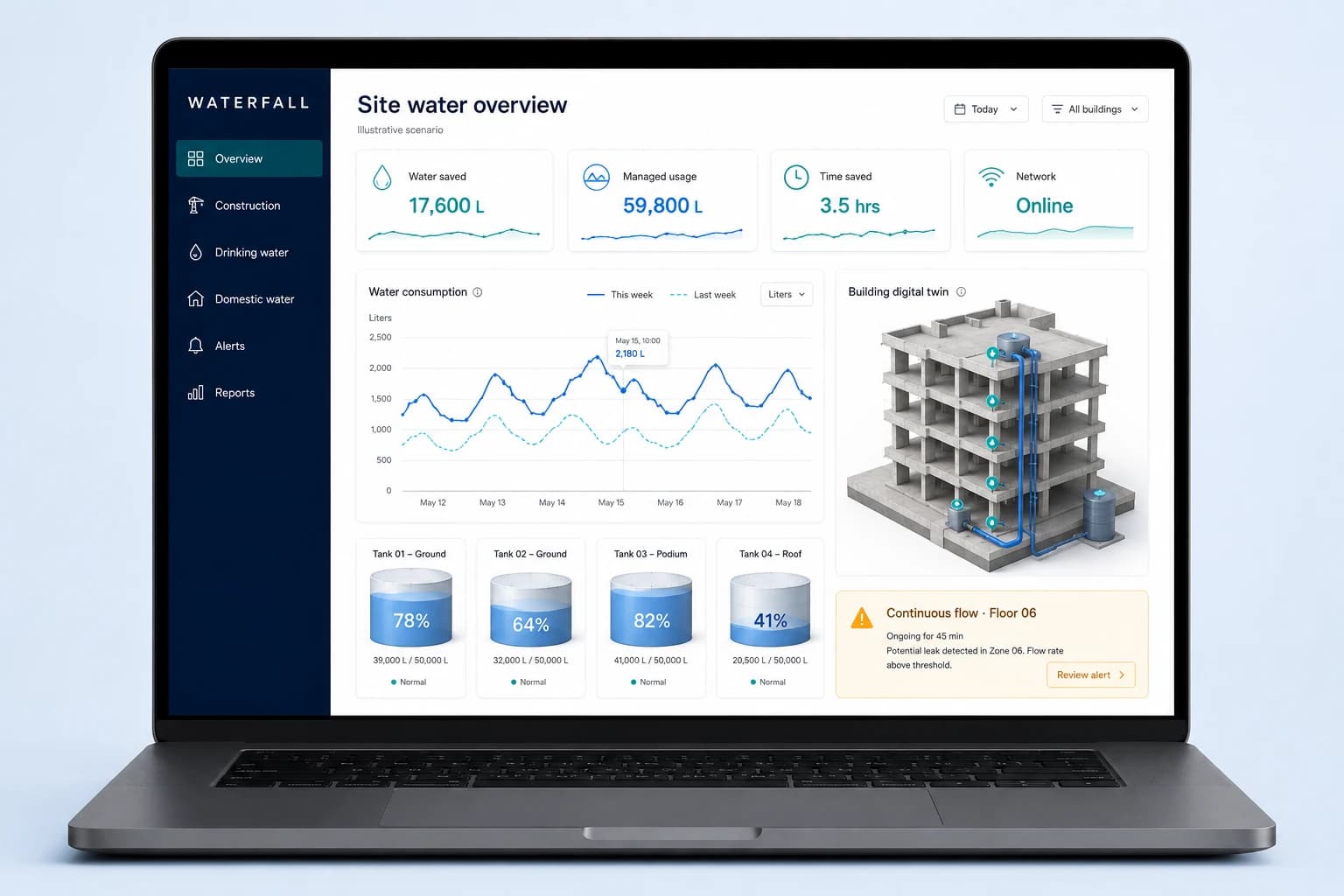
Connected site water operations: IoT sensors, cloud monitoring, and valve control across construction, drinking, and domestic water networks.
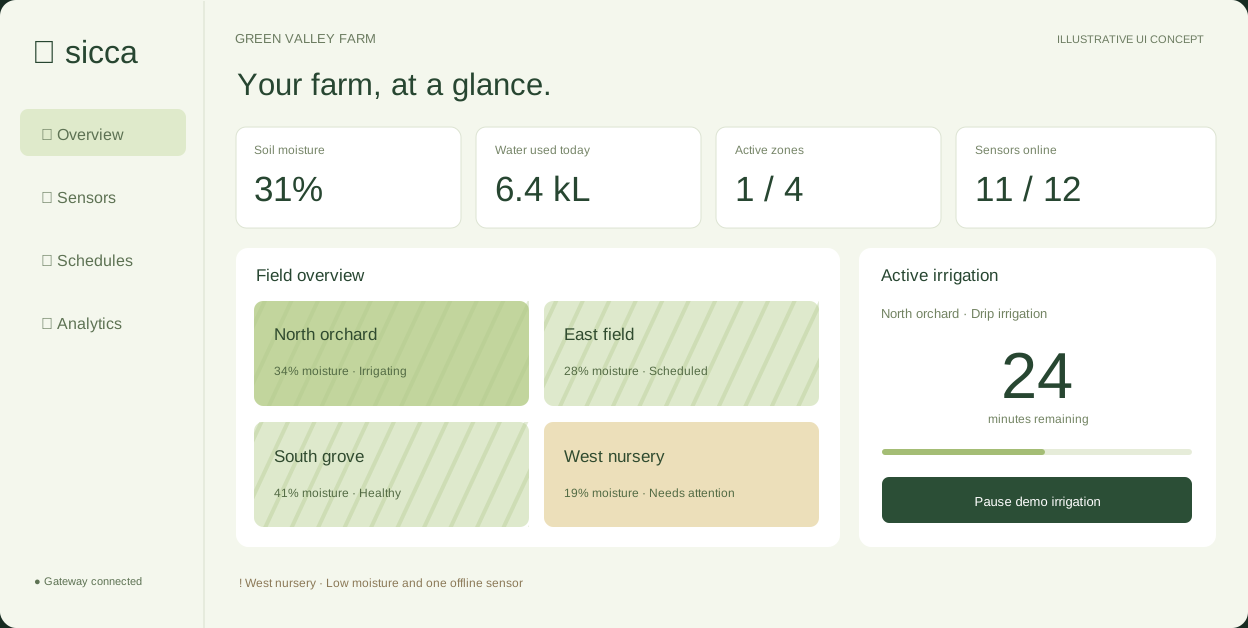
View Case Study ↗A modern irrigation product concept connecting field sensors, plot health, automated watering, and farm analytics across web and mobile.
View Case Study ↗Let's turn your institutional vision into a digital reality. Book your strategy session today.
Book a Strategy SessionContact Us
Reach out to us:
Mail us @
[email protected]Someone from our team will reach out in the next 24hrs, we look forward to the conversation


 Pharma products
 Total stock
 Expiring soon
 Cold-chain alerts
 Inbound vs outbound
 Stock health
 Warehouse utilization